I still remember the time when an acquaintance showed me videos that, back then, were considered “funny”: men with backpacks left in places, a reference to terrorism. Five years ago, I myself produced a video about polygamy versus monogamy. But time passed.
I have a degree in Tourism, and among many lessons, I learned not to limit myself to prejudice—even though most people choose to live within it. I broke the bubble.
In 2020, I was studying religions, history, psychology, and eras. One of the readings I did was the Qur’an (the sacred book of Islam, revealed to the Prophet Muhammad through the angel Gabriel over 23 years). I remember listening to a portion every day until I finished. It was one of the readings I enjoyed most. When I finished, I became vegetarian.
In 2025, I met Pakistani doctoral students in Natural Sciences who are Muslims and live in Viçosa (Minas Gerais) and Ouro Preto (Minas Gerais). That encounter caught my attention: I felt more connected to nature, natural phenomena, and scientific observation, just as I did in childhood. I constantly perceived a kind of elevation and connection with angels.
This feeling reminded me of an episode from adolescence. At 15, one night when I was very sad, I saw before me a luminous being. At that moment, I felt I was not alone.
In 2020, I also stopped consuming alcohol and began making donations. My mindset changed. I missed people with similar habits. That’s why I consider 2025 a gift: Allah presented me with people who transformed my life.
I was baptized in the Catholic Church, but I never felt comfortable in that environment. I always thought differently, always curious. I studied my DNA and understood many things. Unfortunately, in Brazil, people of non-Catholic religions are often pressured to give up their faith. History shows that there were various migrations: Jews, Moors (African Muslims), among others, were persecuted, enslaved, and prevented from practicing their faith. Indigenous peoples were catechized and deprived of their spirituality linked to nature. These conflicts left marks that still manifest today as religious repression.
In the spring of 2025, I released my own book Não beba das águas de quem finge matar a sua sede (Do Not Drink from the Waters of Those Who Pretend to Quench Your Thirst). The protagonist is named Maria. I plan to translate it and, in that process, also change the characters’ names into another language. The book will continue: I am already working on Volume 2. The back cover reveals much about who I chose to be now.
After the book launch, a friend told me about a dream: in it, I appeared alongside a crescent moon in the sky. This detail, so symbolic within Islamic tradition, reinforced my certainty that I was walking a path of revelation and belonging.
There was also a time when I moved house and named a corner of the land: I called it the Garden of Allah. At that moment, I didn’t know I would become who I am today, but there was already in me an intuition of faith and surrender.
I also met people from Lebanon. One of them had the word Allah tattooed in Arabic. Curiously, I loved that design I saw, even without knowing anything about it. Later, I realized that symbol already connected me, unconsciously, to the path I would follow.
On January 25, 2026, I organized an event with an Arab theme, alluding to the Malê Revolt—a historic uprising of enslaved African Muslims in Bahia—as a symbol of cultural and spiritual resistance. This event was also a way to honor the memory of those who, even persecuted, kept their faith and identity alive.
My baptismal name is Jacilene, which means “what the moon reflects or the light of the sun.” I have always admired the lights of the sky. Today, February 18, 2026, I am experiencing my first Ramadan (the ninth and most sacred month of the Islamic calendar, marked by 29 to 30 days of daily fasting, intensified prayers, charity, and spiritual reflection). I write this account while fasting, with tears of gratitude.
Islam also came into my life through conversations with my department head, a cultured and well-traveled man. I learned much about the other side of the ocean, which broadened my search for identity. I read scientific articles, experience reports, practiced, and followed what my heart asked. Thus, in the days leading up to Ramadan, I made my reversion to Islam.
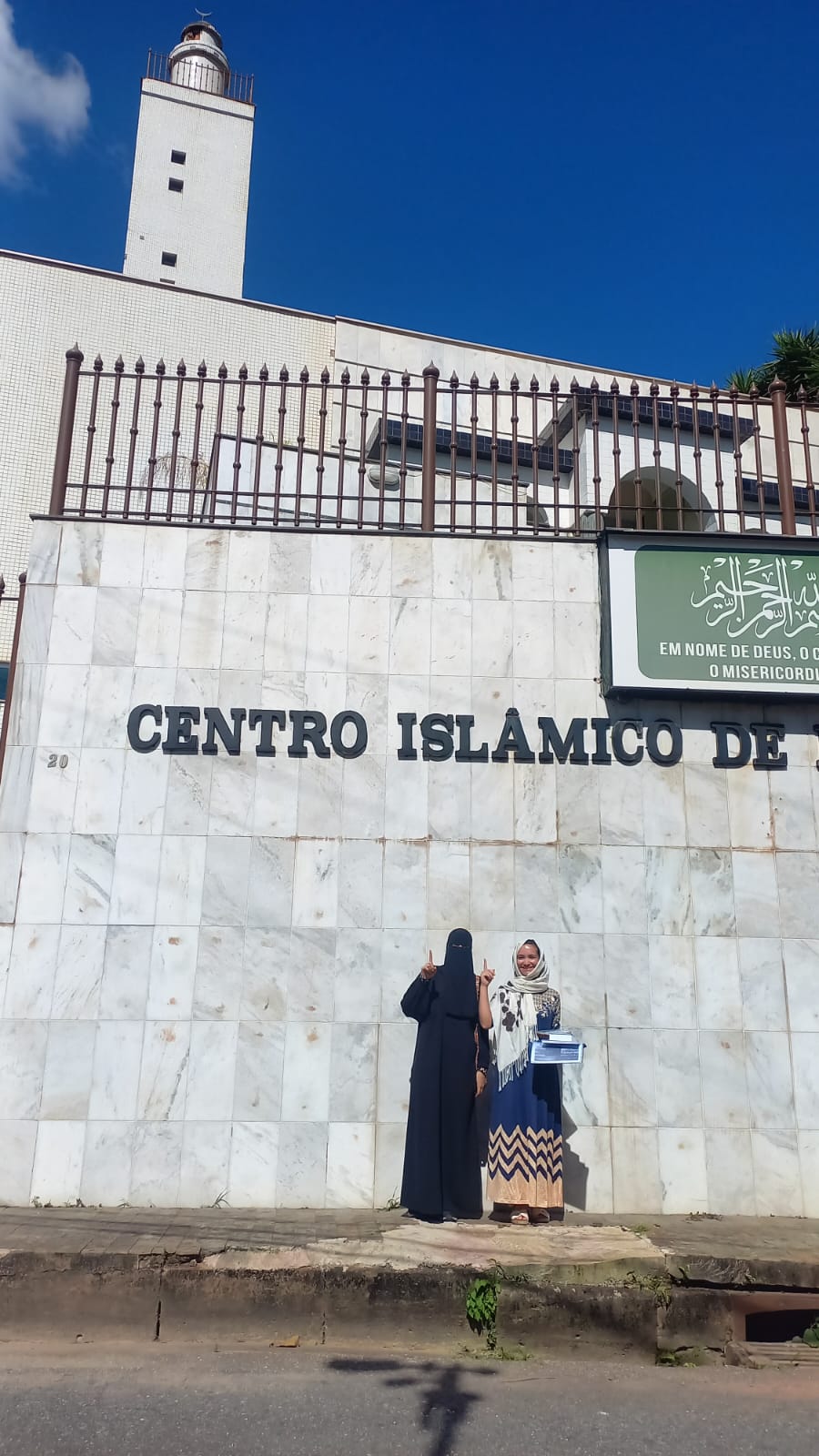
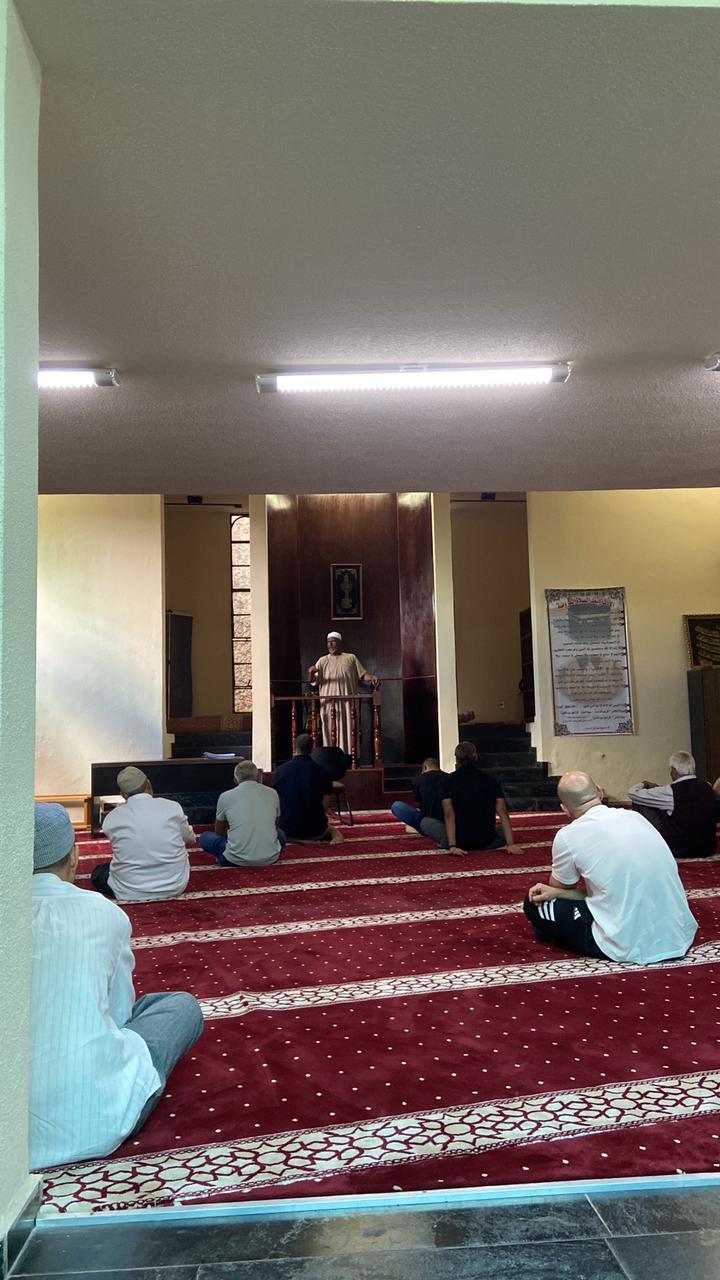
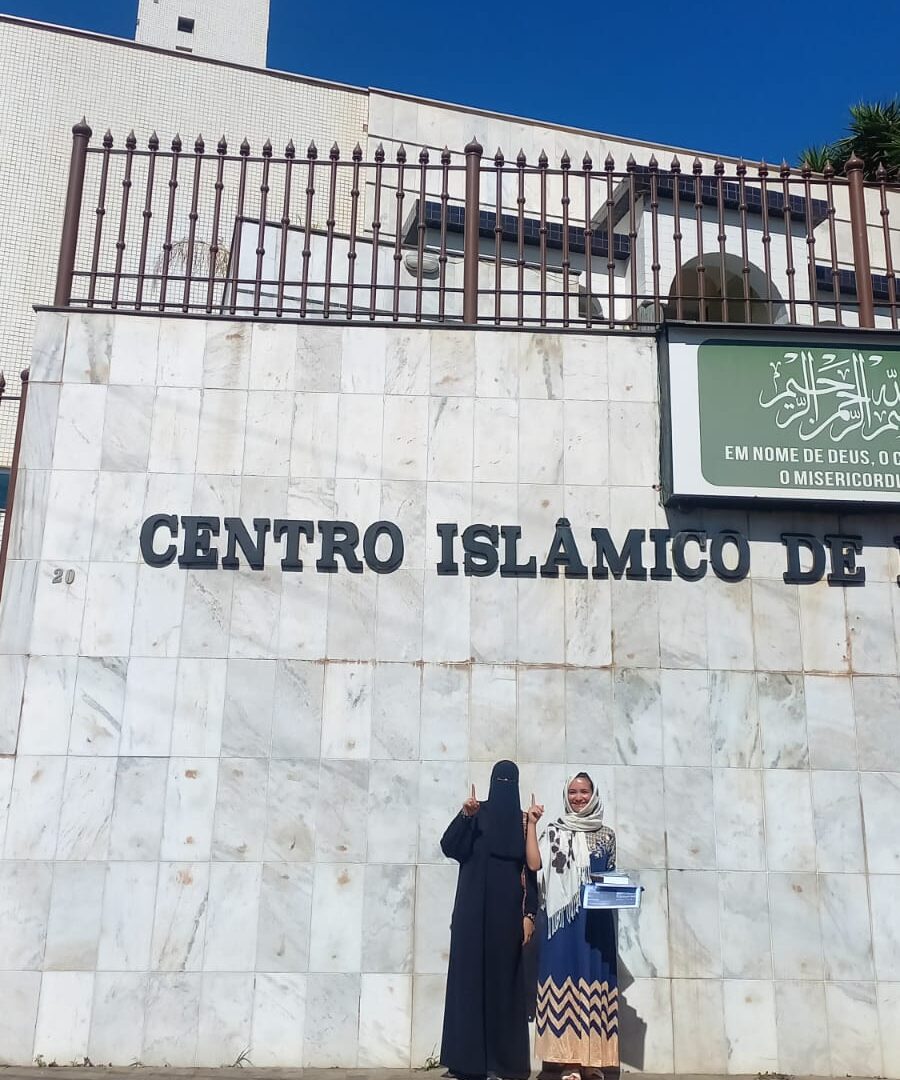
Photos: archive (Islamic Center of Minas Gerais)
Now I am Muslim. The word Muslim comes from the Arabic muslim, meaning “one who submits”—referring to submission to God (Allah). The name Allah, in turn, simply means “God” in Arabic. It is important to remember that Muslims also believe in the existence of Mary (Maryam) and Jesus (Isa), recognizing them as sacred and respected figures within Islamic tradition.
Another concept that marked me was Maktub, an Arabic word meaning “it was written” or “destiny.” For Muslims, Maktub expresses the idea that everything that happens is already written by God, and that there is a greater wisdom guiding each step of life.
I know prejudice exists. I know I will face distrust, rejection, and criticism. But I am grateful to be more connected to God, to Allah, to the divine breath. In the end, it will always be about me and God, on the Day of Judgment.
I never imagined following a religion. I never imagined learning Arabic. But today I study the language because of Islam—and I realize that, after beginning to practice the faith, other languages also became easier to learn. This openness brought me not only knowledge but also belonging.
Today I have many contacts with people from various parts of Brazil and other countries. This network of friendships and exchanges makes me feel I belong more to the world, because I know who I am.
Among Muslims, the traditional greeting is: As-salamu ‘alaykum (ٱلسَّلَامُ عَلَيْكُمْ), which means “Peace be upon you.” This greeting, often accompanied by the gesture of placing the hand over the heart, expresses respect, sincerity, and humility before God and others.
Unfortunately, few people seek wisdom. Many simply read information without researching, without questioning, without thinking outside the box. Their hearts remain turned toward prejudice. I recall a colleague who, upon learning that I had Muslim friends, exclaimed: “What are they? Suicide bombers? Are they fleeing war?” I found it pitiful. But I also remembered that, some time ago, I myself did not know what I know today. Knowledge frees us from prejudice.
It must be remembered: religious intolerance is a crime. We live in a secular country, where all beliefs must be respected. Islamophobia—prejudice and hostility against Islam and its practitioners—is not only religious intolerance but also a form of racism, as it affects entire communities for their faith and cultural identity. Like racism, Islamophobia can lead to legal accountability. Attacking or discriminating against people for their religion means violating the Constitution and human dignity, as well as undermining the values of democratic coexistence. In Brazil, reports can be made through the Human Rights Hotline (Dial 100), coordinated by the Ministry of Human Rights and Citizenship. It is also possible to file complaints on the Fala.Br Platform, of the National Ombudsman, or directly with state and municipal agencies for racial equality promotion.
Revista Poesias e Cartas, February 18, 2026, 4:16 PM São Paulo time (Brazil)
Text signed by Maryam Arruda
+55 31 99531-5732